Joan Rivers' 'Fashion Police' Will Expand to One-Hour Format in March
With an extra half hour each week, the series will add a "street style" segment and "guess me by my style" game.
E!'s Fashion Police is getting super-sized.
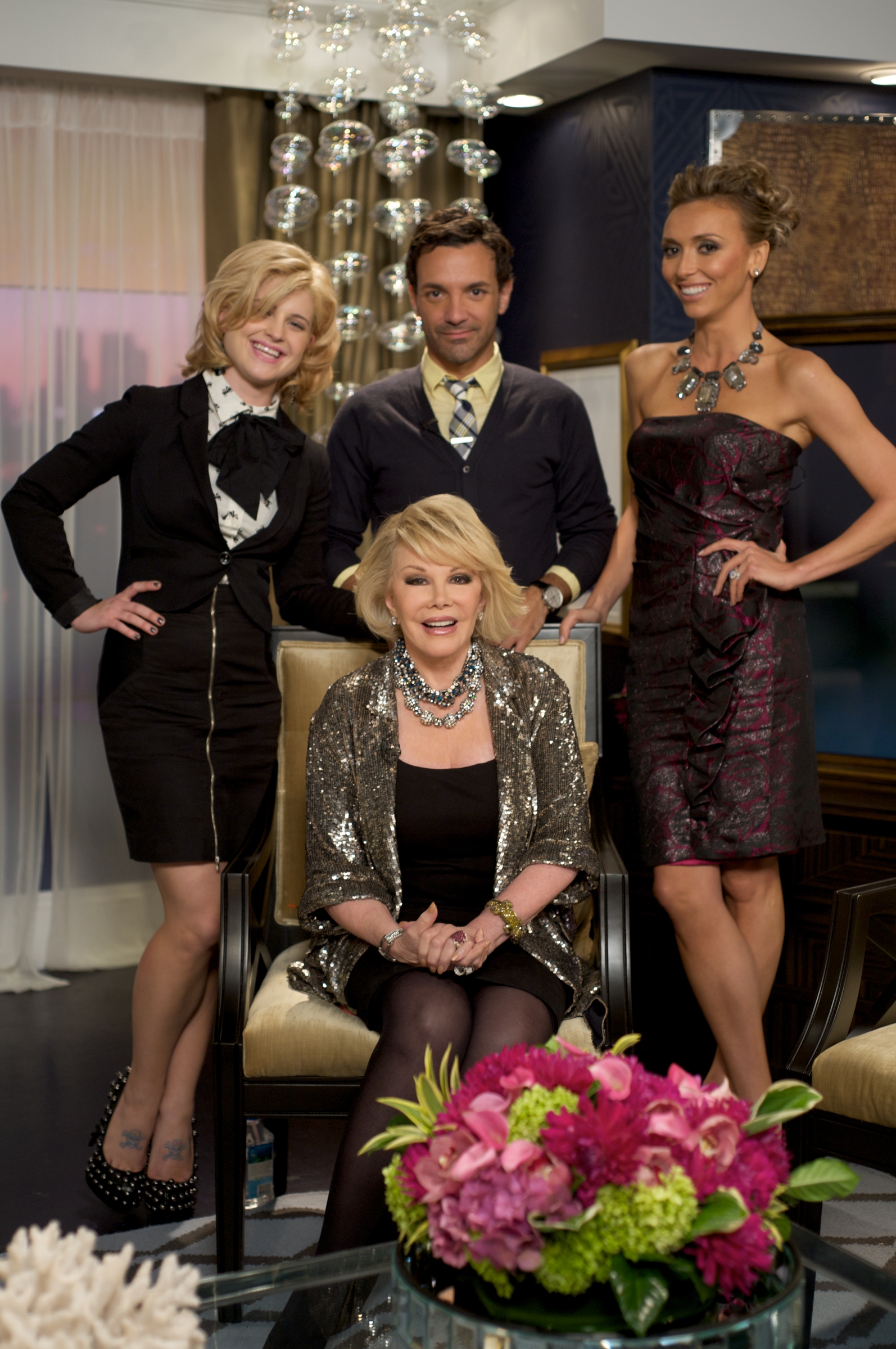
Just as the network had done with E! News a year earlier, the fashion show, hosted by Joan Rivers, will move from a half-hour to an hour beginning March 9.
Rivers, along with her opinionated panel of Kelly Osbourne, Giuliana Rancic and George Kotsiopoulos, will incorporate more guest stars and new segments, including "street style" and a "guess me by my style" game.
In addition, the extra thirty minutes will allow the the comedian to spend more time outside of the studio, visiting designers in their showrooms, hanging backstage at fashion shows and doling out brutally honest fashion advice to wanting -- and unwanting -- celebrities.
“Comedic commentary is a signature part of the E! brand that resonates with our audience and we will continue to look for opportunities like this to further invest in the genre and bring more clever humor to the network,” said E!'s president of entertainment programming Lisa Berger in a statement.
The news comes as the cable network is looking to evolve into a "smarter" and more "aspirational" destination under the leadership of new entertainment chief Suzanne Kolb and her boss, NBC Cable Entertainment chairwoman Bonnie Hammer.
Since Fashion Police launched in September 2010, the weekly series produced by Comcast Entertainment Studios has been a solid performer for the female-centric network. It regularly lures nearly 1 million viewers, and has grown each quarter.
Search This Blog
zondag 8 januari 2012
5 Things to Know About Jeff Lewis' New Bravo Series, 'Interior Therapy'
Part remodeling, part relationship counseling, the outspoken home designer branches out to his second reality show for the network.
Bravo has found the perfect vehicle for Flipping Out star, Jeff Lewis, with his new home remodeling series, Interior Therapy, which combines both his talent for remodeling with his tendency to pick out what’s wrong with people.
Lewis and longtime assistant, Jenni Pulos, appeared Saturday at Bravo’s TCA presentation in Pasadena and here’s five things they revealed about the new series.
1. It’s both home design and therapy show rolled into one. “It’s conflict by design,” executive producer Andrew Hoegl describes the series, which places Jeff and Jenni in clients' homes for both a remodel and a hard look at their relationships. “We were looking for people who have a problem that’s centered around their space.”
2. The client isn’t totally out of the loop. Unlike other remodeling shows, it sounds like these clients won’t be going away for several days to a big reveal at the end of the episode without having some say. “I try to keep them as involved as possible without ruining the surprise. I prefer a client to be very involved,” says Lewis.
3. Housekeeper Zoila stars also. “Does she want to be there? No. Does she eat all day long at Craft service? Yes,” Lewis jokes. He says the housekeeper helps in the beginning of the process to pack up, organize and clean before the remodeling happens. She also comes in to clean and set up before the clients return to see their homes at the end of the process.
4. There’s some investment in these clients’ lives. “We got really emotionally involved,” Pulos says of the clients they work with. At the same time, Jeff is clear that doesn’t mean he ends up liking everyone they work with. “We spend so much time with these people. It’s not always about the paycheck -- which is why I did this,” he says. He then adds, “I sometimes hated them, wanted them dead, and wanted to go to the neighbors and see what I could do there.”
5. Things don’t always go as planned. “We don’t always finish,” Lewis says. He says we’ll definitely see the real side of home remodeling shows in that they don’t always finish the job in the time allotted.
Part remodeling, part relationship counseling, the outspoken home designer branches out to his second reality show for the network.
Bravo has found the perfect vehicle for Flipping Out star, Jeff Lewis, with his new home remodeling series, Interior Therapy, which combines both his talent for remodeling with his tendency to pick out what’s wrong with people.
Lewis and longtime assistant, Jenni Pulos, appeared Saturday at Bravo’s TCA presentation in Pasadena and here’s five things they revealed about the new series.
1. It’s both home design and therapy show rolled into one. “It’s conflict by design,” executive producer Andrew Hoegl describes the series, which places Jeff and Jenni in clients' homes for both a remodel and a hard look at their relationships. “We were looking for people who have a problem that’s centered around their space.”
2. The client isn’t totally out of the loop. Unlike other remodeling shows, it sounds like these clients won’t be going away for several days to a big reveal at the end of the episode without having some say. “I try to keep them as involved as possible without ruining the surprise. I prefer a client to be very involved,” says Lewis.
3. Housekeeper Zoila stars also. “Does she want to be there? No. Does she eat all day long at Craft service? Yes,” Lewis jokes. He says the housekeeper helps in the beginning of the process to pack up, organize and clean before the remodeling happens. She also comes in to clean and set up before the clients return to see their homes at the end of the process.
4. There’s some investment in these clients’ lives. “We got really emotionally involved,” Pulos says of the clients they work with. At the same time, Jeff is clear that doesn’t mean he ends up liking everyone they work with. “We spend so much time with these people. It’s not always about the paycheck -- which is why I did this,” he says. He then adds, “I sometimes hated them, wanted them dead, and wanted to go to the neighbors and see what I could do there.”
5. Things don’t always go as planned. “We don’t always finish,” Lewis says. He says we’ll definitely see the real side of home remodeling shows in that they don’t always finish the job in the time allotted.
Kristy McNichol, 'Family' and 'Empty Nest' Actress, Comes Out as Lesbian
The former sitcom star made the announcement in hopes of helping others who are victims of bullying.
Kristy McNichol, best known for her roles on Family and Empty Nest, has been out of the spotlight for quite some time, but decided to walk back into the public eye, announcing that she is a lesbian, and revealing that she has been happily living with her partner for that past two decades.
The actress, who no longer works in the business, told People that she made the decision to come out as a lesbian because she is "approaching 50" and wants to "be open about who I am."
Her publicist told People that McNichol is upset about young people being bullied. "She hopes that coming out can help kids who need support. She would like to help others who feel different,” said the rep.
McNichol, 49, also provided a photo to people, showing her and her partner Martie Allen, also 49, smiling at a dinner.
McNichol played Buddy Lawrence on the show Family in the 70s, and won an Emmy for her work on the show. She also starred as Barbara Weston on Empty Nest. She also had several roles in films, including in 1980’s Little Darlings.
She has not worked in the industry in years, focusing on her personal life and health. She was diagnosed with bipolar disorder in 1992. Currently living in Los Angeles, she spends her free time traveling, playing tennis and doing yoga.
The former sitcom star made the announcement in hopes of helping others who are victims of bullying.
Kristy McNichol, best known for her roles on Family and Empty Nest, has been out of the spotlight for quite some time, but decided to walk back into the public eye, announcing that she is a lesbian, and revealing that she has been happily living with her partner for that past two decades.
The actress, who no longer works in the business, told People that she made the decision to come out as a lesbian because she is "approaching 50" and wants to "be open about who I am."
Her publicist told People that McNichol is upset about young people being bullied. "She hopes that coming out can help kids who need support. She would like to help others who feel different,” said the rep.
McNichol, 49, also provided a photo to people, showing her and her partner Martie Allen, also 49, smiling at a dinner.
McNichol played Buddy Lawrence on the show Family in the 70s, and won an Emmy for her work on the show. She also starred as Barbara Weston on Empty Nest. She also had several roles in films, including in 1980’s Little Darlings.
She has not worked in the industry in years, focusing on her personal life and health. She was diagnosed with bipolar disorder in 1992. Currently living in Los Angeles, she spends her free time traveling, playing tennis and doing yoga.
TV broadcasters enjoy spoils of political wars
One winner in 2012's political races already has been decided: local television stations.
Spending on TV advertising likely will mount to historic levels as candidates again blanket airwaves with commercials pitching their virtues or bashing their opponents. The hard-fought, and expensive, battles will provide a welcome windfall for TV stations, particularly in the most tightly contested states that will decide if President Barack Obama wins re-election or loses to his yet-to-be-decided Republican opponent.
Forecasters are calling for spending on political advertisements to increase up to 30 percent this year compared with 2008, setting a new record and reflecting, in part, a response to the landmark "Citizens United" 2010 Supreme Court ruling, which ended most restrictions on donations by corporations and unions. This is the first presidential election since the ruling.
The decision fostered the creation of Super PACs, fundraising committees that can spend money to support a candidate but cannot officially coordinate with campaigns. Republican Mitt Romney's Super PAC, Restore Our Future, has raised at least $12.2 million, while Obama's Super PAC, Priorities USA Action, has raised at least $3.2 million, according to OpenSecrets.org, a website associated with the nonpartisan group Center for Responsive Politics.
Around 85 percent of the money that is raised and spent on advertising historically goes toward local broadcast TV. In 2012, that could total between $2.5 billion to $3.0 billion, said Ken Goldstein, president of Kantar Media's Campaign Media Analysis Group.
"Television advertising remains a message weapon of choice to most campaigns," Goldstein said. "Every year is a record."
Spending in 2012 should easily beat the mark of $2.4 billion in the 2010 mid-term elections, the first to include Super Pac money and a cycle that featured no presidential race on the ballot but saw gubernatorial and Senate contests in big, expensive states such as California, Texas and New York. By comparison, about $2.1 billion was spent on local broadcast TV commercials in 2008 -- before the creation of the new rules governing Super Pacs.
That will undoubtedly boost the fortunes of companies that operate and own local TV stations. Those dozen or so companies with stations in the battleground states of the Midwest should benefit most as political money floods in, but among that group the biggest winners are difficult to predict since much will depend on how the campaign unfolds district-by-district.
Among the potential beneficiaries is CBS Corp, which owns stations in Colorado, Florida, Pennsylvania and Michigan. News Corp's Fox controls stations in Michigan, Florida and Pennsylvania, while Gannett Co Inc. has them in Colorado, Florida, Michigan.
But because they are smaller -- without, say, movie studios and book divisions such as News Corp -- the impact of the 2012 election cycle will be felt even more bluntly on a handful of smaller media companies that own ABC, NBC, CBS or Fox affiliated stations in key election states.
It's a prospect that has not been lost on investors, who, anticipating strong political spending and a better advertising market in general, scooped up shares of E.W. Scripps, Belo Corp., Sinclair Broadcast Group, Media General throughout the fall.
Sinclair, for instance, is up 53 percent in the last three months, Belo, Scripps and Media General are all at least 25 percent stronger over the same period. All have outperformed the broader market, and the consensus among analysts is that they have more upside.
"It looks like it could be an incredibly strong spending year, if the Republicans can settle on a candidate fairly soon and get the head-to-head race going," Scripps CEO Rich Boehne said at a recent conference, telling investors the company sold $48 million in political ads in 2010 and $42 million in 2008.
"Any way it goes, it is going to be a strong year, and we have got sensational geography for political," he said.
Indeed, which stations cash in the most will depend partly on how quickly the Republican party settles on a nominee. A long, tightly-contested Republican Primary, for instance, could mean stations in the March 6 "Super Tuesday" states such as Massachusetts, Ohio, Tennessee and Virginia could see heavy activity from Republican spenders.
Even California would get an unexpected shot of campaign spending right before its June 5th vote if the Republican race is still up in the air.
Should Romney keep his momentum coming out of Iowa and clinch the Republican spot early, then the money will be concentrated on the swing states of the general election.
"The ad dollars are still going to get spent. They're just going to get spent on the presidential campaign," said Carl Salas, senior analyst for Moody's Investors Service. "You would see the Democrats needing to step up even sooner in those swing states."
Salas pointed to Gray Television and LIN TV Corp as companies likely to benefit the most from political ads in 2012. The three were among the broadcasters with the highest percentages of political advertising in the 2010 election season, he said.
Gray in particular owns stations in many state capitals and college towns that are politically active markets, Salas said. Key states for Gray in the presidential race include Florida, Indiana and North Carolina.
And while it's stock is up 15 percent in the last three months, the gains are not as dramatic as some of its competitors, which could make it one of the hot media companies of 2012.
Spanish-language broadcasters including Entravision Communications and Univision also stand to reap a growing share of political ads. "The candidates know they need to win a good portion of the Spanish-language vote to win the election. What used to not be a target for the campaigners will now be something they are going to focus on," Salas said.
Whatever the market, local TV advertising will still get the lion's share of spending, experts agree, even with the growing popularity of creating buzz through social networks and newer media.
"TV still seems to be the one place that gets the big audiences, and it's so immediate," said Maribeth Papuga, who oversees local TV and radio purchases as director of Local Video Investment and Activation at media agency MediaVest.
Besides, she said, campaign managers and politicians "are simply creatures of habit."
One winner in 2012's political races already has been decided: local television stations.
Spending on TV advertising likely will mount to historic levels as candidates again blanket airwaves with commercials pitching their virtues or bashing their opponents. The hard-fought, and expensive, battles will provide a welcome windfall for TV stations, particularly in the most tightly contested states that will decide if President Barack Obama wins re-election or loses to his yet-to-be-decided Republican opponent.
Forecasters are calling for spending on political advertisements to increase up to 30 percent this year compared with 2008, setting a new record and reflecting, in part, a response to the landmark "Citizens United" 2010 Supreme Court ruling, which ended most restrictions on donations by corporations and unions. This is the first presidential election since the ruling.
The decision fostered the creation of Super PACs, fundraising committees that can spend money to support a candidate but cannot officially coordinate with campaigns. Republican Mitt Romney's Super PAC, Restore Our Future, has raised at least $12.2 million, while Obama's Super PAC, Priorities USA Action, has raised at least $3.2 million, according to OpenSecrets.org, a website associated with the nonpartisan group Center for Responsive Politics.
Around 85 percent of the money that is raised and spent on advertising historically goes toward local broadcast TV. In 2012, that could total between $2.5 billion to $3.0 billion, said Ken Goldstein, president of Kantar Media's Campaign Media Analysis Group.
"Television advertising remains a message weapon of choice to most campaigns," Goldstein said. "Every year is a record."
Spending in 2012 should easily beat the mark of $2.4 billion in the 2010 mid-term elections, the first to include Super Pac money and a cycle that featured no presidential race on the ballot but saw gubernatorial and Senate contests in big, expensive states such as California, Texas and New York. By comparison, about $2.1 billion was spent on local broadcast TV commercials in 2008 -- before the creation of the new rules governing Super Pacs.
That will undoubtedly boost the fortunes of companies that operate and own local TV stations. Those dozen or so companies with stations in the battleground states of the Midwest should benefit most as political money floods in, but among that group the biggest winners are difficult to predict since much will depend on how the campaign unfolds district-by-district.
Among the potential beneficiaries is CBS Corp, which owns stations in Colorado, Florida, Pennsylvania and Michigan. News Corp's Fox controls stations in Michigan, Florida and Pennsylvania, while Gannett Co Inc. has them in Colorado, Florida, Michigan.
But because they are smaller -- without, say, movie studios and book divisions such as News Corp -- the impact of the 2012 election cycle will be felt even more bluntly on a handful of smaller media companies that own ABC, NBC, CBS or Fox affiliated stations in key election states.
It's a prospect that has not been lost on investors, who, anticipating strong political spending and a better advertising market in general, scooped up shares of E.W. Scripps, Belo Corp., Sinclair Broadcast Group, Media General throughout the fall.
Sinclair, for instance, is up 53 percent in the last three months, Belo, Scripps and Media General are all at least 25 percent stronger over the same period. All have outperformed the broader market, and the consensus among analysts is that they have more upside.
"It looks like it could be an incredibly strong spending year, if the Republicans can settle on a candidate fairly soon and get the head-to-head race going," Scripps CEO Rich Boehne said at a recent conference, telling investors the company sold $48 million in political ads in 2010 and $42 million in 2008.
"Any way it goes, it is going to be a strong year, and we have got sensational geography for political," he said.
Indeed, which stations cash in the most will depend partly on how quickly the Republican party settles on a nominee. A long, tightly-contested Republican Primary, for instance, could mean stations in the March 6 "Super Tuesday" states such as Massachusetts, Ohio, Tennessee and Virginia could see heavy activity from Republican spenders.
Even California would get an unexpected shot of campaign spending right before its June 5th vote if the Republican race is still up in the air.
Should Romney keep his momentum coming out of Iowa and clinch the Republican spot early, then the money will be concentrated on the swing states of the general election.
"The ad dollars are still going to get spent. They're just going to get spent on the presidential campaign," said Carl Salas, senior analyst for Moody's Investors Service. "You would see the Democrats needing to step up even sooner in those swing states."
Salas pointed to Gray Television and LIN TV Corp as companies likely to benefit the most from political ads in 2012. The three were among the broadcasters with the highest percentages of political advertising in the 2010 election season, he said.
Gray in particular owns stations in many state capitals and college towns that are politically active markets, Salas said. Key states for Gray in the presidential race include Florida, Indiana and North Carolina.
And while it's stock is up 15 percent in the last three months, the gains are not as dramatic as some of its competitors, which could make it one of the hot media companies of 2012.
Spanish-language broadcasters including Entravision Communications and Univision also stand to reap a growing share of political ads. "The candidates know they need to win a good portion of the Spanish-language vote to win the election. What used to not be a target for the campaigners will now be something they are going to focus on," Salas said.
Whatever the market, local TV advertising will still get the lion's share of spending, experts agree, even with the growing popularity of creating buzz through social networks and newer media.
"TV still seems to be the one place that gets the big audiences, and it's so immediate," said Maribeth Papuga, who oversees local TV and radio purchases as director of Local Video Investment and Activation at media agency MediaVest.
Besides, she said, campaign managers and politicians "are simply creatures of habit."
Joe Scarborough: Obama the Favorite in 2012
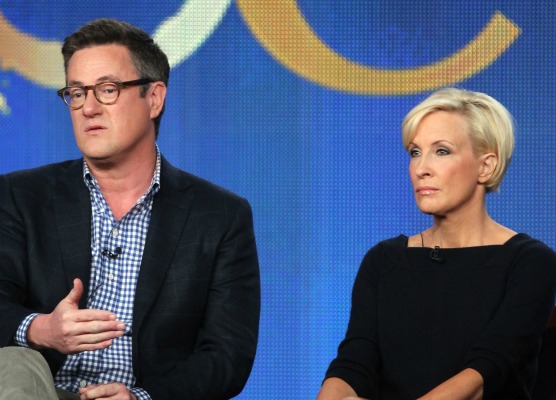
MSNBC "Morning Joe" host Joe Scarborough predicts Mitt Romney will emerge as the Republican presidential nominee, but that he'll be so weakened by the nominating process that President Obama will be hard to beat.
"I think actually if you look at the numbers ... unemployment's going down. If those trends continue I think it's going to be hard for Mitt Romney to win," Scarborough, a former Republican congressman, told TheWrap. "And I do think these debates have really damaged the Republican brand. And these weak candidates that have come out that are a product of new media ... really damaged the Republican brand."
Scarborough and his co-host, Mika Brzezinski, spoke at the Television Critics Association winter press tour about "Morning Joe." In a brief interview after their panel, Brzezinski predicted outright an Obama win, but Scarborough stopped short of that.
"No. There's stil a lot of drama," he said.
Brzezinksi asked Scarborough: "Can you say the party has not produced a strong field that can really take this opportunity [to beat Obama]? An opportunity that is wide open?"
"No doubt about it," Scarborough said. "I think he's got to be the favorite."
Scarborough, Brzezinski, and "Morning Host" cohort Willie Geist appeared on the panel with MSNBC president Phil Griffin, who declined to discuss Keith Olbermann's recent spat with Current TV. Olbermann abruptly quit MSNBC just short of a year ago, and joined Current months later.
Griffin feigned unfamiliarity with Olbermann's current situation during the panel, and later told TheWrap, "I don't discuss it."
The "Morning Joe" team talked about how their relaxed, conversational approach to politics and issues of the day has helped theirs become the second-highest cable news show in the morning, behind Fox's "Fox and Friends." Griffin said MSNBC planned a New York Times advertisement for Sunday that will say, essentially, that "Morning Joe" has been often imitated but never equaled.
Scarborough and Brzezinski, who recently extended their contracts with MSNBC, confirmed CBS had talked with them about joining the network. But they ultimately opted not to, in part because a network news show wouldn't allow them to have the kind of 30-minute interviews that are a hallmark of the show, Scarborough said.
He said the show discovered the importance of long interviews in part because of a talk with Walter Isaacson about his Albert Einstein biography.
The author declined to come into the studio for an early morning interview, Scarborough said, so the host suggested they talk by phone. Scarborough's executive producer thought a phone interview about Einstein and 100-year-old theories in physics would be deathly dull television, but Scarborough insisted on pressing on and doing a second segment.
"And so we go on for another 15 minutes -- 30 minutes with Walter Isaacson, talking on a phone, it's obvious that he just rolled over in bed, talking about Albert Einstein," Scarborough said.
"The next day we get the ratings back. It was our highest rated 30 minutes."
MSNBC "Morning Joe" host Joe Scarborough predicts Mitt Romney will emerge as the Republican presidential nominee, but that he'll be so weakened by the nominating process that President Obama will be hard to beat.
"I think actually if you look at the numbers ... unemployment's going down. If those trends continue I think it's going to be hard for Mitt Romney to win," Scarborough, a former Republican congressman, told TheWrap. "And I do think these debates have really damaged the Republican brand. And these weak candidates that have come out that are a product of new media ... really damaged the Republican brand."
Scarborough and his co-host, Mika Brzezinski, spoke at the Television Critics Association winter press tour about "Morning Joe." In a brief interview after their panel, Brzezinski predicted outright an Obama win, but Scarborough stopped short of that.
"No. There's stil a lot of drama," he said.
Brzezinksi asked Scarborough: "Can you say the party has not produced a strong field that can really take this opportunity [to beat Obama]? An opportunity that is wide open?"
"No doubt about it," Scarborough said. "I think he's got to be the favorite."
Scarborough, Brzezinski, and "Morning Host" cohort Willie Geist appeared on the panel with MSNBC president Phil Griffin, who declined to discuss Keith Olbermann's recent spat with Current TV. Olbermann abruptly quit MSNBC just short of a year ago, and joined Current months later.
Griffin feigned unfamiliarity with Olbermann's current situation during the panel, and later told TheWrap, "I don't discuss it."
The "Morning Joe" team talked about how their relaxed, conversational approach to politics and issues of the day has helped theirs become the second-highest cable news show in the morning, behind Fox's "Fox and Friends." Griffin said MSNBC planned a New York Times advertisement for Sunday that will say, essentially, that "Morning Joe" has been often imitated but never equaled.
Scarborough and Brzezinski, who recently extended their contracts with MSNBC, confirmed CBS had talked with them about joining the network. But they ultimately opted not to, in part because a network news show wouldn't allow them to have the kind of 30-minute interviews that are a hallmark of the show, Scarborough said.
He said the show discovered the importance of long interviews in part because of a talk with Walter Isaacson about his Albert Einstein biography.
The author declined to come into the studio for an early morning interview, Scarborough said, so the host suggested they talk by phone. Scarborough's executive producer thought a phone interview about Einstein and 100-year-old theories in physics would be deathly dull television, but Scarborough insisted on pressing on and doing a second segment.
"And so we go on for another 15 minutes -- 30 minutes with Walter Isaacson, talking on a phone, it's obvious that he just rolled over in bed, talking about Albert Einstein," Scarborough said.
"The next day we get the ratings back. It was our highest rated 30 minutes."
Bravo Gives Kathy Griffin Primetime Talk Show
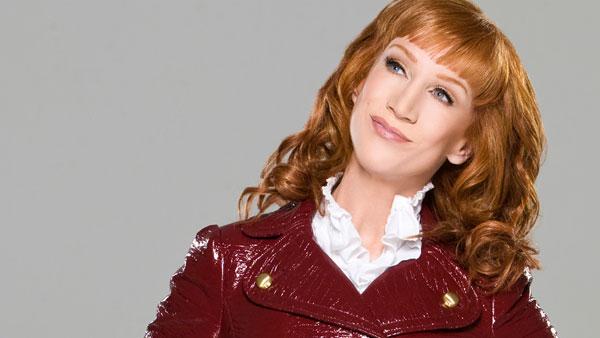
Bravo announced that Kathy Griffin will host a one-hour weekly talk show beginning this spring, as well as renewals for "The Millionaire Matchmaker," "Pregnant in Heels," and "Million Dollar Listing LA."
The network also announced that culinary experts Curtis Stone and Cat Cora will host the previously announced international cooking competition "Around the World in 80 Plates."
"Kathy" will be "the destination to get Griffin's thoughts on everything pop culture as she rants on the week's biggest headlines and tabloid gossip," Bravo said in a news release. It will also feature standup, celebrity interviews and prerecorded segments.
Griffin will also appear in two new one-hour comedy specials this year, adding to her 13 previous Bravo specials since 2005.
"The Millionaire Matchmaker" will will return for a sixth season, "Pregnant in Heels" for a second, and and "Million Dollar Listing LA" for a fifth.
Bravo boasted its sixth consecutive best year ever, and ranked eleventh among all cable networks in the 18-49 demographic. It will increase its original programming by 25 percent in 2012.
"Around the World in 80 Plates," which Bravo announced in August, follows 12 chefs as they compete in 10 countries in 44 days.
Bravo announced that Kathy Griffin will host a one-hour weekly talk show beginning this spring, as well as renewals for "The Millionaire Matchmaker," "Pregnant in Heels," and "Million Dollar Listing LA."
The network also announced that culinary experts Curtis Stone and Cat Cora will host the previously announced international cooking competition "Around the World in 80 Plates."
"Kathy" will be "the destination to get Griffin's thoughts on everything pop culture as she rants on the week's biggest headlines and tabloid gossip," Bravo said in a news release. It will also feature standup, celebrity interviews and prerecorded segments.
Griffin will also appear in two new one-hour comedy specials this year, adding to her 13 previous Bravo specials since 2005.
"The Millionaire Matchmaker" will will return for a sixth season, "Pregnant in Heels" for a second, and and "Million Dollar Listing LA" for a fifth.
Bravo boasted its sixth consecutive best year ever, and ranked eleventh among all cable networks in the 18-49 demographic. It will increase its original programming by 25 percent in 2012.
"Around the World in 80 Plates," which Bravo announced in August, follows 12 chefs as they compete in 10 countries in 44 days.
Ex-Urkel Jaleel White: I Would Love to Be on 'Breaking Bad'
"I would love to be on 'Breaking Bad,'" says Jaleel White, best known for playing teen nerd Steve Urkel on nine seasons of the sitcom "Family Matters." He repeats for emphasis: "I would love to be on "Breaking Bad."
Hahaha, you may say. "Breaking Bad"? The incredibly gritty and intense AMC drama about a chemisty teacher turned methamphetamine kingpin? Steve Urkel, he of the high-waisted pants and nasal catchphrase, on "Breaking Bad"? That, you laugh, would be like the dad on "Malcolm in the Middle" starring on "Breaking Bad."
Except that Malcolm's dad -- Bryan Cranston -- does star on "Breaking Bad." And has won three consective Emmys for it.
Cranston's success in breaking his "Malcolm" typecasting has been one model for White as he continues to establish himself outside the role that made him famous. Now a writer as well as an actor, the 35-year-old has worked steadily since "Family Matters" wrapped in 1997, logging recent turns "Psych," "House," and "NCIS."
We talked with him at the Television Critics Association winter press tour, where he is promoting his upcoming SyFy series, "Total Blackout," in which contestants have to undergo a series of frightening challenges in total darkness. (They may have to reach into a tank, for example, with no idea what's inside. In the dark, an eel and a teddy bear can be equally frightening.) White hosts the show.
Now a sharp-dressed, deep-voiced man who bears no resemblance to Urkel, he talked with us about his own fears, why he sympathizes with Bristol Palin, and his respect for both Cranston and Giancarlo Esposito, who played "Breaking Bad" villain Gustavo "Chicken Man" Fring.
"Total Blackout" is all about facing the things that scare you. What scares you, whether it's a big-picture fear or something like hating snakes?
I probably used to have a fear of failure, personally. But I think I've definitely overcome that. I'm a father now so I have a two-year-old daughter. The second you get that child in this world to help you realize it's not about you. But other than that, I don't like possums.
Why a fear of failure? You were a huge success right out of the gate.
That's the reason why. Because you know how it happened. You know that there's a lot of happenstance, a lot of moon, stars and dust that add up to create success. And you can't control all of that.
"I would love to be on 'Breaking Bad,'" says Jaleel White, best known for playing teen nerd Steve Urkel on nine seasons of the sitcom "Family Matters." He repeats for emphasis: "I would love to be on "Breaking Bad."
Hahaha, you may say. "Breaking Bad"? The incredibly gritty and intense AMC drama about a chemisty teacher turned methamphetamine kingpin? Steve Urkel, he of the high-waisted pants and nasal catchphrase, on "Breaking Bad"? That, you laugh, would be like the dad on "Malcolm in the Middle" starring on "Breaking Bad."
Except that Malcolm's dad -- Bryan Cranston -- does star on "Breaking Bad." And has won three consective Emmys for it.
Cranston's success in breaking his "Malcolm" typecasting has been one model for White as he continues to establish himself outside the role that made him famous. Now a writer as well as an actor, the 35-year-old has worked steadily since "Family Matters" wrapped in 1997, logging recent turns "Psych," "House," and "NCIS."
We talked with him at the Television Critics Association winter press tour, where he is promoting his upcoming SyFy series, "Total Blackout," in which contestants have to undergo a series of frightening challenges in total darkness. (They may have to reach into a tank, for example, with no idea what's inside. In the dark, an eel and a teddy bear can be equally frightening.) White hosts the show.
Now a sharp-dressed, deep-voiced man who bears no resemblance to Urkel, he talked with us about his own fears, why he sympathizes with Bristol Palin, and his respect for both Cranston and Giancarlo Esposito, who played "Breaking Bad" villain Gustavo "Chicken Man" Fring.
"Total Blackout" is all about facing the things that scare you. What scares you, whether it's a big-picture fear or something like hating snakes?
I probably used to have a fear of failure, personally. But I think I've definitely overcome that. I'm a father now so I have a two-year-old daughter. The second you get that child in this world to help you realize it's not about you. But other than that, I don't like possums.
Why a fear of failure? You were a huge success right out of the gate.
That's the reason why. Because you know how it happened. You know that there's a lot of happenstance, a lot of moon, stars and dust that add up to create success. And you can't control all of that.
Abonneren op:
Reacties (Atom)